
What an extraordinary journey! What an extraordinary event!
On 27 November 2025, Energy Cities with support from all partners organized in Brussels the Final Event of the POWER UP project. A dynamic morning brought together leading voices from municipalities, energy cooperatives, social justice advocates, and policymakers to explore the future of inclusive, community-led energy systems in Europe and beyond.
This event marked the culmination of four years of experimentation with and learning from inclusive investment schemes. As governments struggle to balance climate goals with social equity and rising energy costs, POWER UP has worked with local pioneers in Spain, Belgium, Czechia, Italy, The Netherlands and North Macedonia to co-design energy schemes that are socially fair, locally owned, and economically viable. They range from social cooperative shares for facilitated membership access to municipal energy from cemeteries with earmarking for vulnerable households.
The half-day event, moderated by Miriam Eisermann from Energy Cities, was packed with inspiring talks, very relevant questions and a lot of very lively conversations on how to make the energy system just despite the remaining constraints. It is impossible to capture the many interesting ideas and reflections that have filled the room. But the following words of one participant still resonate with us and they are pretty much the core of what POWER UP partners have accomplished over the past 4 years: “We still don’t know what is the perfect model, but we know we’ve made a big step.”
Key takeaways and presentations for download
⭐General event slides incl POWER UP resources
⭐KEYNOTE SPEECH: Presentation by Dr. Adeline Otto, Senior Researcher who talked about the different perceptions and possible approaches of just climate and energy policies.
Dr. Otto explored with the audience questions around the social and ecological risks our societies are facing and the policy design needed to cope with them. Eco-social risks are unevenly distributed amongst the population. And none of the eco-social risks (economic, health, infrastructure etc.) are new, but climate change works as an aggravating catalyst, placing additional stress on existing welfare systems. She ended her very engaging speech with a list of suggested ways forward, from individual and community solutions to broader societal actions at macro level.
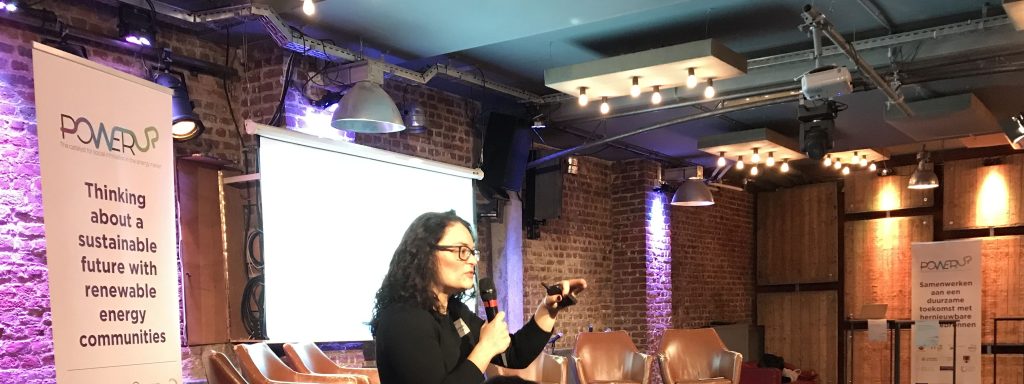
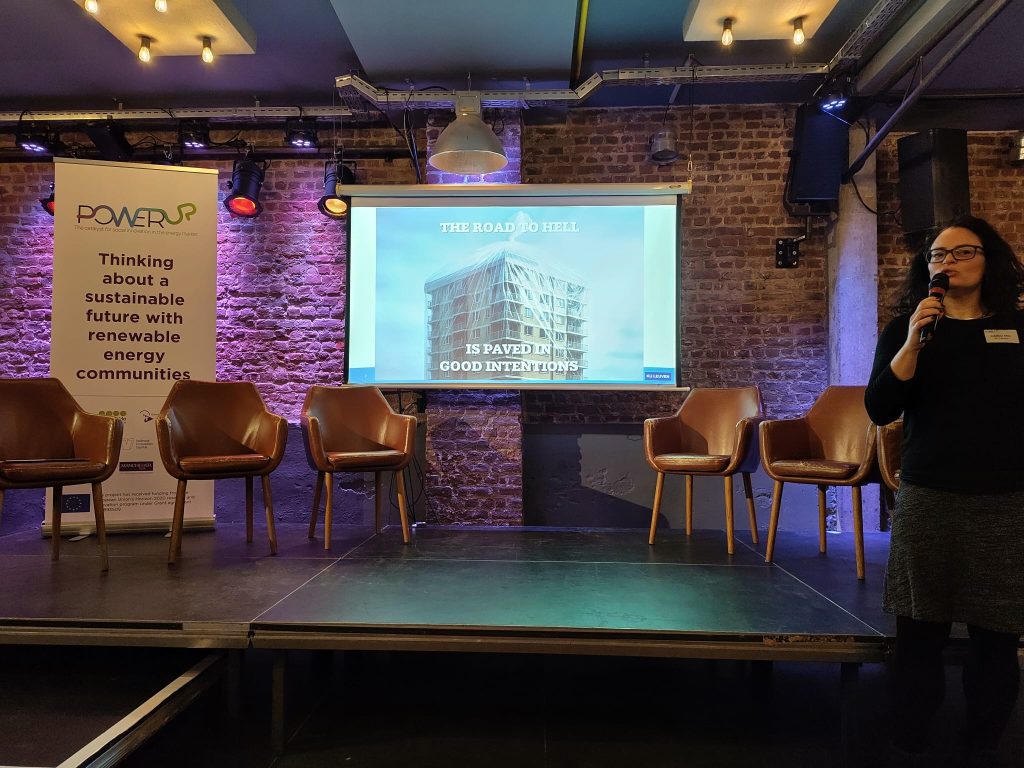
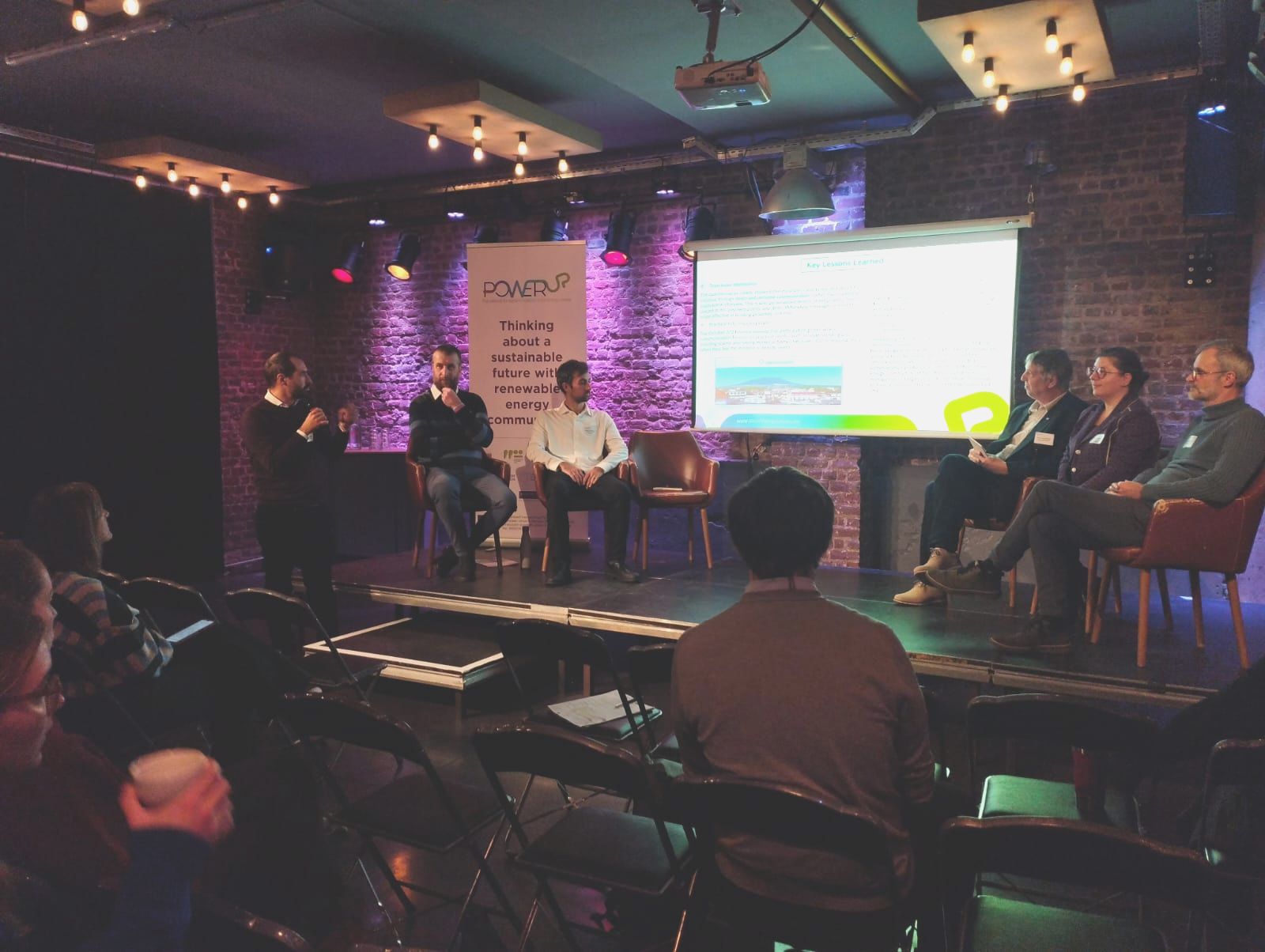
POWER UP – 4 years of collective search for fair schemes: 5-min pitch by each pilot presenting what was done and biggest learning. Pilots and observers provided snapshot insights into each pilot and observer activity and the progress made over more than 4 years to strengthen the agency of vulnerable people in the design of energy services.
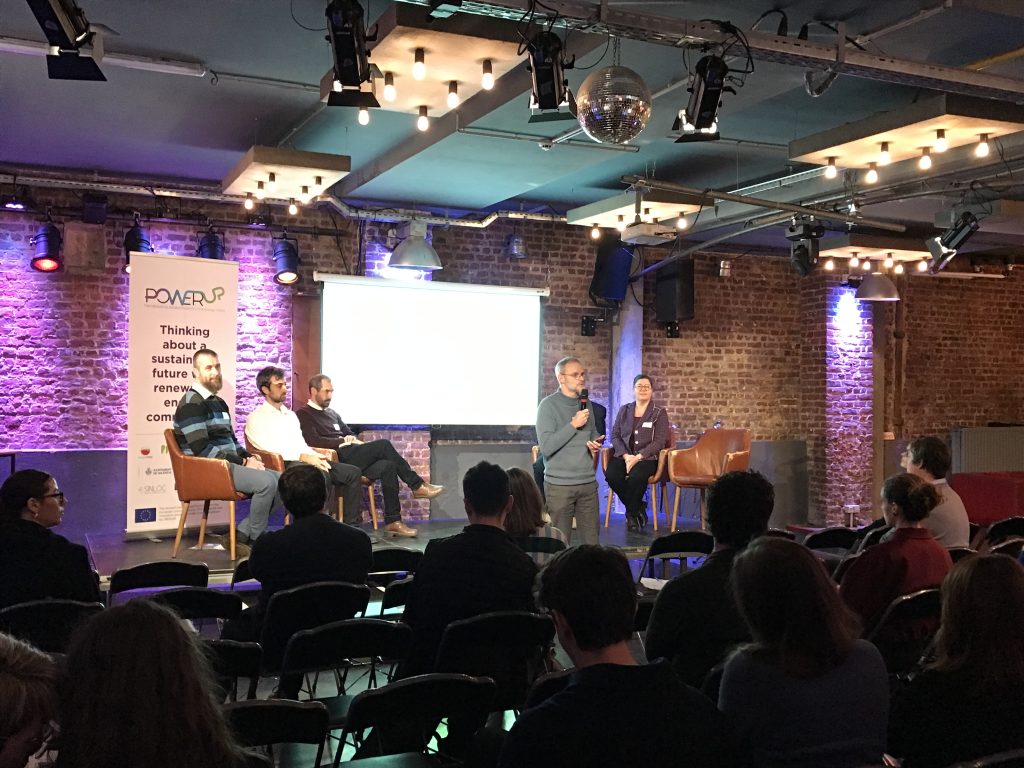
- BELGIUM – Eeklo and Ecopower: Energy services for vulnerable households: a joint (ad)venture between city and energy cooperative in times of fluctuating market conditions
- ITALY – Campania area: Designing a REC by activating local players
- CZECH REPUBLIC – Rožnov pod Radhoštěm: Collective PV in social housing – innovating in smaller municipalities
- NORTH MACEDONIA: Tackling energy poverty in a non-EU country
- SPAIN – Valencia: Municipal engagement and strategy to foster citizen energy/community power
- THE NETHERLANDS – Heerlen: Inclusive outreach and energy poverty mitigation in a post-coal town
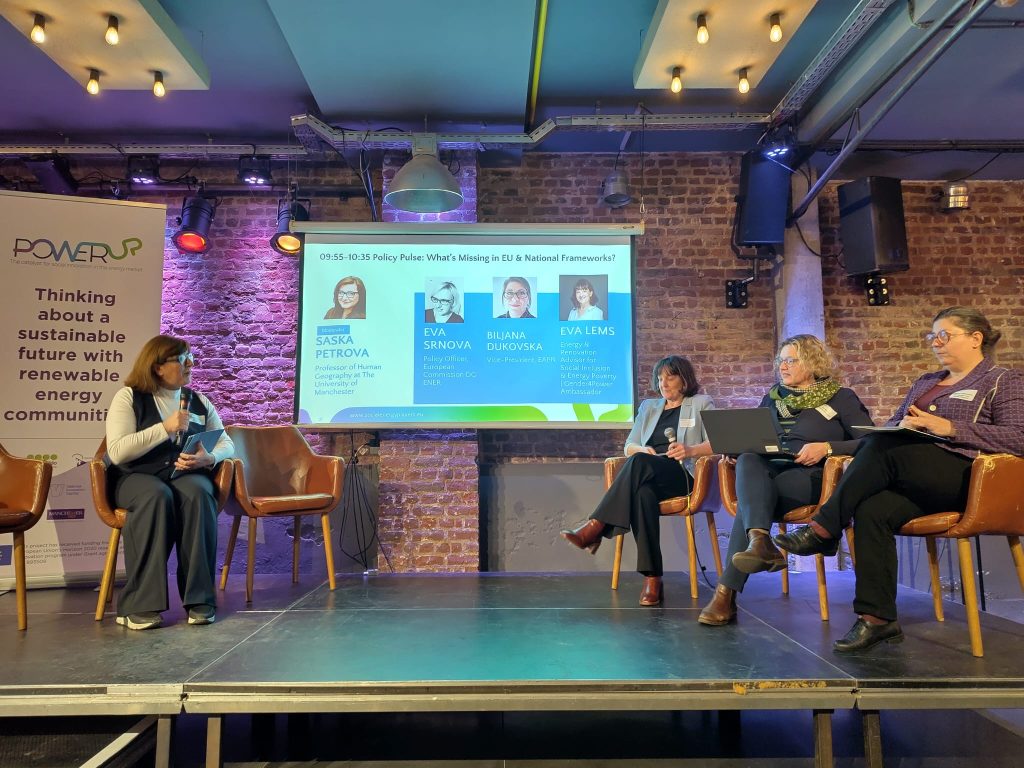
POLICY PULSE – What’s Missing in EU & National Frameworks? This was a 40-minutes panel talk moderated by Saska Petrova, Professor of Human Geography at The University of Manchester. Panellists of the “Policy Pulse” all-women session reflected on the evolution of and missing gaps in housing, energy and social policies addressing energy poverty.
- Eva Srnova, Policy Officer, European Commission DG ENER
- Biljana Dukovska, Macedonian Energy Poverty Platform, Vice-President EAPN
- Eva Lems, Energy & Renovation Advisor for Social Inclusion & Energy Poverty | Gender4Power Ambassador
In view of strengthening the link between energy, climate, social and housing justice, they mentioned the following:
- The importance to understand people with their vulnerabilities and needs – energy being only one piece of energy poverty in a large puzzle in EU and non-EU countries – before even drafting/reforming policies
- A note by DG ENER on cost-effective measures for tackling energy poverty as suggested under the Social Climate Fund: Support for the implementation of the Social Climate Fund – Publications Office of the EU
- The structural measures of the Austrian coordination office for combating poverty and its activities at federal and state/regional levels
- The benefits of serial renovation projects like Energiesprong and the German Caritas project whereby unemployed people get trained as energy advisors.
- The need for policies to be shaped in a way to support initiatives that prove successful in small-scale projects – with hopes for the EU’s Affordable Housing Initiative, the Social Climate Fund and the Citizen Energy Package to bring inclusivity and social justice at the forefront of decarbonisation strategies.
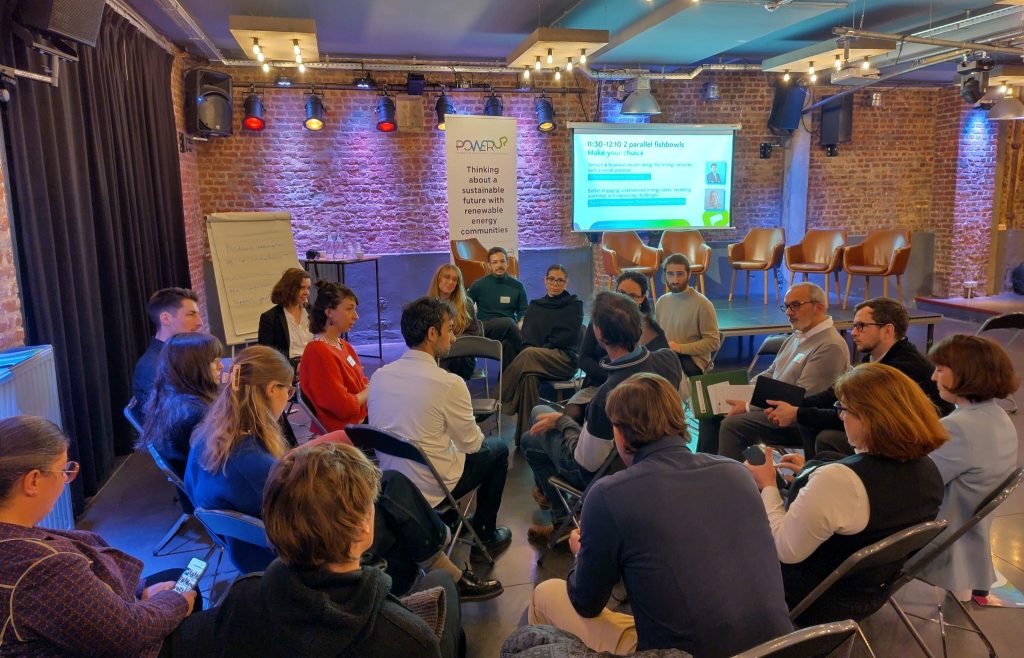
Social, but profitable business models in times of scarce public resources – A POWER UP utopia?
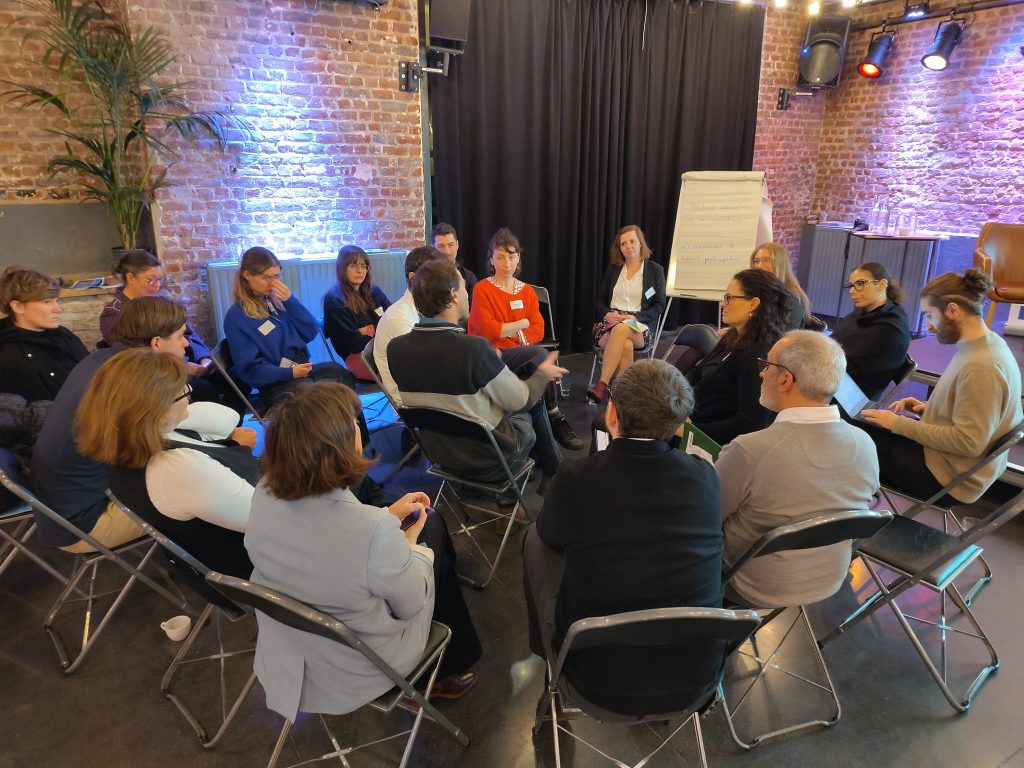
Fishbowl 1, moderated by Matteo Meneghetti, SINLOC: Service & business model design for energy services with a social purpose
The municipal leadership in renewable energy production comes with opportunities and challenges. POWER UP municipalities shared the technical, financial and socioeconomic aspects of their recent work. Discussions with other participants revealed that public activity and business purposes can seem contradictory. Rather than talking about inclusive business models, should municipalities talk about inclusive investment models?
Fishbowl 2, moderated by Ami Crowther, University of Manchester: Better engaging underserved energy users: revealing learnings and unpacking challenges
POWER UP municipalities shared their challenges and learnings around engagement of vulnerable households. The group conversation highlighted that all consumers should have the chance to engage in energy decisions. Yet, examples from participants showed low awareness of energy poverty and fear of speaking up. Gender emerged as a key dimension: women often manage household energy but are less represented in collective decisions, with participation shaped by timing, childcare and social norms. Co-creation experiences from Belgian and Spanish participants stressed trust building, local presence, and offering short-term tangible solutions.
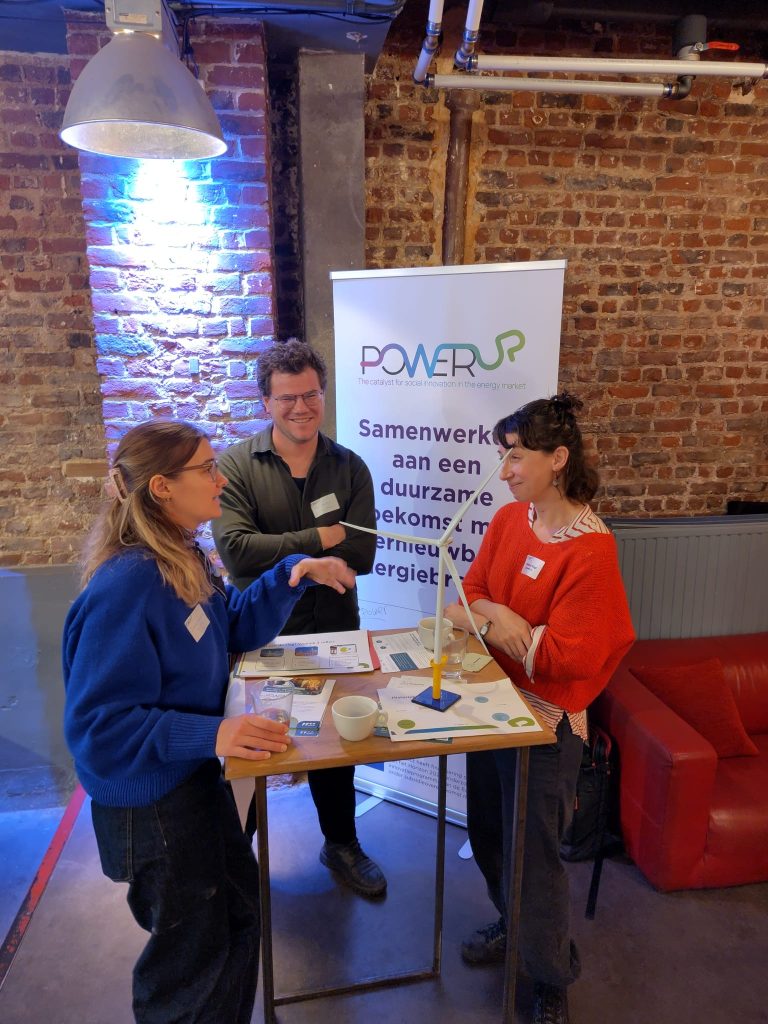
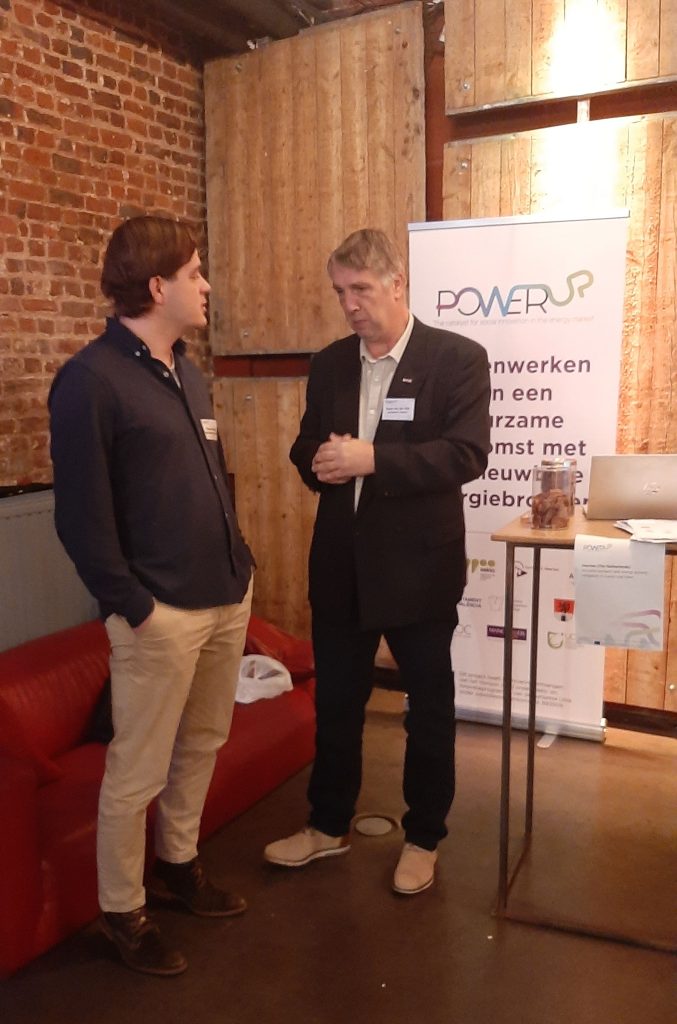
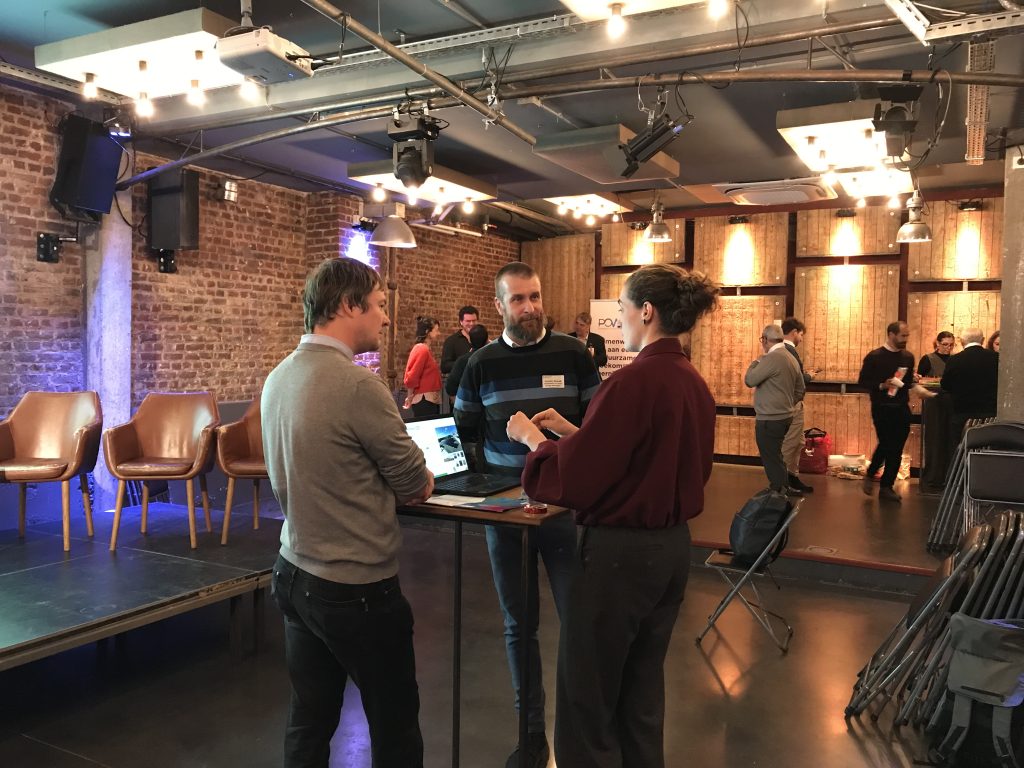
The event ended with a convivial world café during which participants deepened conversations with the POWER UP pilots and observers.
The Final Event Report (D6.5) that briefly summarises the POWER UP morning in Brussels will soon be available.